
Any BACSA members living near, or travelling in, the New England area of the USA may be interested to hear about this exhibition being held at the Center for British Art at Yale University, in New Haven, Connecticut, until 21st June. And those of us who might not be able to visit in person can nevertheless click here to view many of the exhibits online, and download a copy of the accompanying illustrated brochure, in English or Spanish…
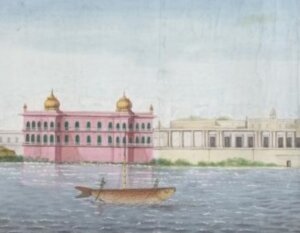
Opened in 1977, the Yale Center for British Art is situated on the Yale university campus, in a modernist building designed by Louis I Kahn. The collection, the ‘largest and most significant collection of British art outside the United Kingdom’, spans more than five centuries, and is free and open to all.
This exhibition features over 100 objects from Asia, including ‘rich opaque watercolours, large-scale oil portraits, evocative architectural drafts’, and a ‘spectacular’ 37’ long scroll, depicting the city of Lucknow.
As the YCBA curators, Laurel O Peterson and Holly Schaffer, explain:
‘By the mid 18th century the British East India Company had developed from being a private trading company into a military and political force which encouraged its agents to commission works of art – for use as gifts, and to provide a visual record of the places and societies where the Company traded and governed.
The Company established trading posts to, from and across Asia (the ‘East Indies’). Artists travelled on the same routes, making images that represented the Company’s world. They documented fruits and other foodstuffs, the docks where products were bought and sold, and the armies that protected this merchandise.
Company networks across Asia enabled the artists to exchange techniques, papers and pigments. They settled in Madras and Calcutta, collaborating in workshops, standardising their materials, and developing designs that could be reused and recombined to make new images. Drawing on Indian courtly and popular traditions, as well as British skills in drafting and surveying, they blended different visual styles to create striking images of the changing world around them. While their artworks varied stylistically, they shared subjects, compositions and materials.
The Company’s rule was abolished in 1858, and India was incorporated into the British Empire’.
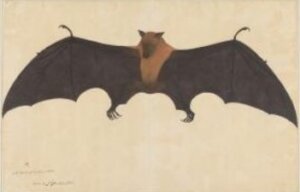
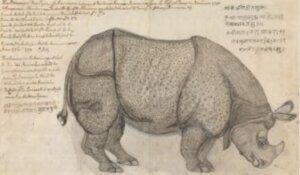
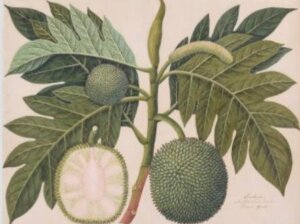
Many thanks to BACSA member Michael Kellett for sending us details of this exhibition, which runs until 21 June 2026, at the Yale Center for British Art, 1080 Chapel Street, New Haven, Connecticut, USA.
***************************************************************************************
(Suggestions for BACSA website news items, volunteering opportunities and diary entries, are always welcome – please send them to ‘comms@bacsa.org.uk’)